
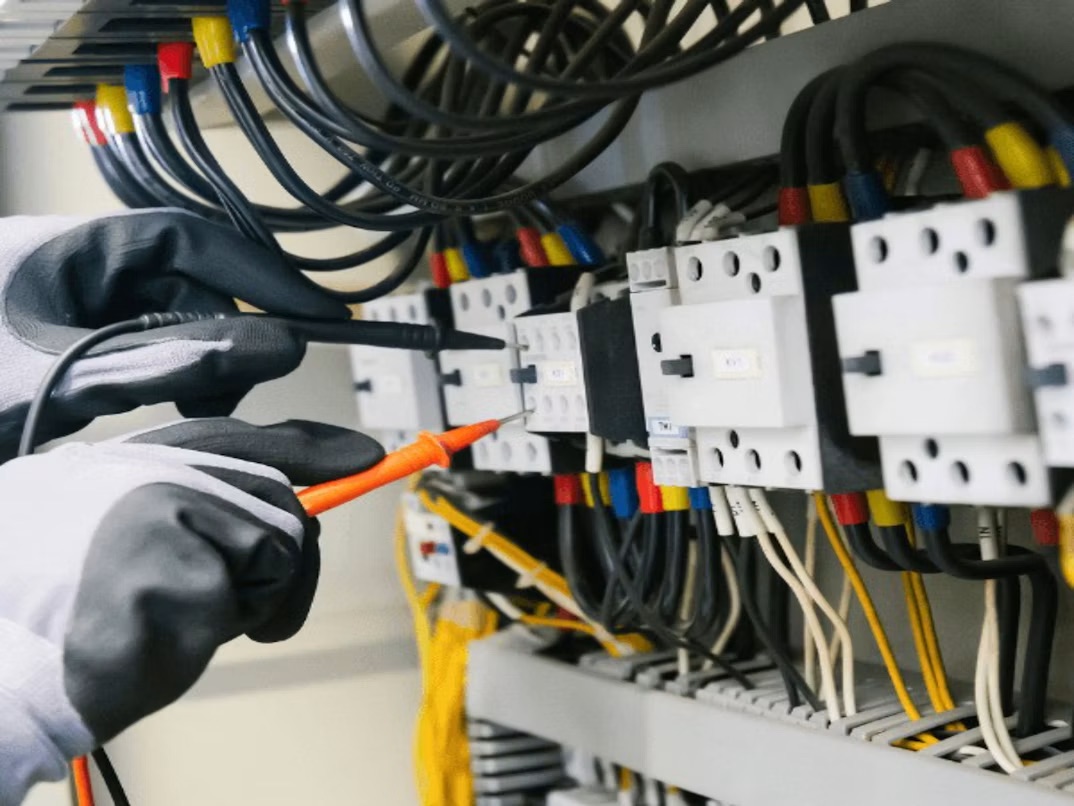
Low-voltage electrician jobs can build a hands-on career for people who enjoy installing and maintaining the systems that keep modern buildings connected. A shift may start with reviewing the day’s scope and checking plans before you head above a ceiling or into an equipment room.
The work blends physical installation with technical problem-solving. These roles support everyday systems, from office network cabling to access control in schools and hospitals. You may work alongside general contractors or IT teams while following jobsite safety rules and project plans. You can also browse electrician jobs for broader electrical openings.
What Systems Do Low-Voltage Electricians Install?
Low-voltage electricians install and service systems that carry signals or control functions at lower voltages than standard building power. The exact mix depends on the employer and project, but the day-to-day work calls for clean installation and careful testing.
Common tasks include pulling cable, mounting devices, terminating wire and checking connections. Cable routing matters because organized pathways help protect wires and make later service work easier. Clear labels also help the next technician find the right cable or device without wasting time.
These systems include:
• Data and network cabling for computers and connected equipment
• Fire alarm systems that send alerts through a building
• Security cameras and access control equipment
• Audio-visual equipment for meeting rooms or shared spaces
Jobsite language becomes familiar quickly. A cable tray supports and routes bundles of cable. A raceway is an enclosed path that protects wiring. A termination is the point where a wire connects to a device or panel. Patch panels organize network connections, while testing equipment helps confirm the signal reaches where it should. Plans and local code requirements guide each installation.
What Does A Typical Low-Voltage Workday Look Like?
A typical low-voltage workday starts with planning and moves into field work. It ends with system checks. Before installation begins, you may review drawings and inspect your tools. The crew may also talk through the work area so cable routes and device locations do not interfere with other trades.
During rough-in, much of the work happens before walls and ceilings are finished. You might pull cable through a new building and leave enough length at each end for future connections. Finish work comes later, when devices are mounted and cables are labeled. The completed system is then tested.
Service work follows a different rhythm. A technician may trace a faulty connection or test a system after a repair. Good documentation matters on every job. When you record completed work and note the system layout, the next person on site has a clearer starting point.
Which Skills And Credentials Help You Get Hired?
Employers look for low-voltage electricians who work safely and complete precise installations. Strong hand-tool skills matter, along with the ability to understand blueprints. Troubleshooting also plays a big role when a connection fails a test or a device does not communicate as expected.
Small details can affect the finished system. Device locations and cable labels both need close attention. A cable pulled to the wrong room or labeled incorrectly can create extra work later, so steady habits matter as much as speed.
Credentials vary by role and location. Depending on the job, employers may value:
• OSHA safety training
• Manufacturer training for specific equipment
• BICSI credentials for cabling work
• NICET certification or experience with fire alarm systems
Check local requirements for the state and city listed in the posting. Some roles focus on security systems or network cabling. Others may require fire alarm experience or a related credential.
In October 2026, OSHA 10 was the certification named most often in US electrician job ads on Tradesppl. See the certifications employers ask for in each trade.
Where Do Low-Voltage Electricians Work?
Low-voltage electricians work on new construction sites and occupied commercial buildings. Common settings include offices, schools, healthcare facilities, warehouses and multi-unit housing. Each location changes how the work is planned.
On a construction project, you may spend time above ceilings or in lifts while coordinating with crews around you. In an occupied building, the work may need to fit around staff or visitors. Equipment rooms and tight ceiling spaces can also be part of the job, so safe tool use and awareness of nearby work remain part of every shift.
Installation contractors often follow a project schedule from rough-in through final testing. Service companies may spend more time on repairs and troubleshooting existing systems.
Where Can You Find Low-Voltage Electrician Jobs?
Browse low-voltage electrician jobs on Tradesppl. Job seekers can search and apply for free. Job descriptions can tell you a lot before you apply, including the systems involved, required credentials, travel expectations and work setting.
Focus on roles that match your current skills and the kind of field work you want to do. A clear posting can help you spot whether the job centers on new construction, service calls, security systems, network cabling or a mix of low-voltage work. Compare the listed duties with your experience, then make sure your application highlights relevant systems experience and credentials.